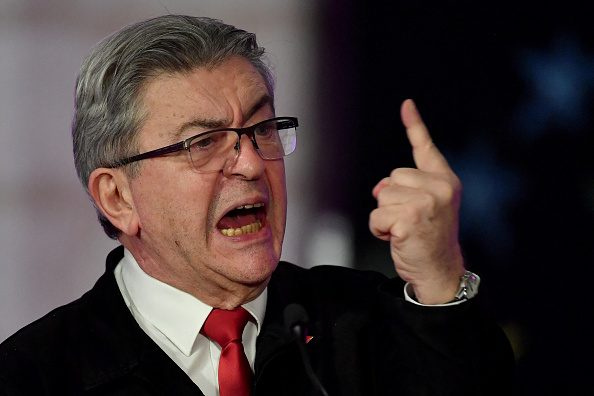
Mélenchon 2027 Ambitions: Unpacking the Silence in Current Reports
The French political landscape is perpetually in motion, with speculation about the next presidential election, scheduled for 2027, already simmering. A central figure in these discussions, despite a conspicuous absence of direct declarations, is Jean-Luc Mélenchon. While numerous reports detail his ongoing political activities, including a series of high-profile meetings in 2026, a deeper dive reveals a notable silence on his specific intentions for the upcoming presidential race. This article aims to explore precisely what current reports *don't* explicitly state regarding a potential
mélenchon élection 2027 bid, and what we can infer from his strategic ambiguity and continued presence.
The provided context, for instance, highlights various meetings involving Mélenchon, such as those with Guillaume Lescaut, David Guiraud, and Shéhérazade, as well as a significant gathering in Charleville-Mézières, all occurring in 2026. Crucially, these reports, while detailing his active engagement, contain no direct mention or analysis of his 2027 electoral aspirations. This absence of a clear "yes" or "no" from the man himself, and consequently from much of the immediate press coverage, forces observers to read between the lines, interpreting his actions and the broader political climate for clues about his future role.
Decoding the Strategic Ambiguity: Why No Direct Declaration?
The lack of a forthright statement concerning
mélenchon élection 2027 is not necessarily an oversight; it could be a deliberate and strategic maneuver. In politics, timing is everything, and a premature declaration can either ignite a campaign or expose it to unnecessary scrutiny and infighting too early. Several factors might contribute to Mélenchon's current stance:
- Maintaining Leverage: By keeping his options open, Mélenchon retains significant political leverage within La France Insoumise (LFI) and the broader left-wing coalition. He remains the undisputed leader and an influential voice, capable of shaping the debate and influencing potential successors.
- Gauging the Political Climate: The political landscape in France is highly fluid. Economic conditions, social movements, the performance of the current government, and the rise or fall of other political figures could all impact the viability of a left-wing candidacy. Mélenchon might be waiting for the optimal moment to assess his chances or to best position the left.
- Internal Party Dynamics: LFI and its allies (like NUPES, the Nouvelle Union Populaire écologique et sociale) are complex entities with various factions and ambitions. Mélenchon's decision, whether to run himself or to endorse another candidate, will have profound implications for party unity and strategy. Delaying a decision could be part of an internal consultation or negotiation process.
- Building Momentum Organically: His numerous meetings and public appearances in 2026, as noted in various reports, serve to keep him relevant, energize his base, and continue articulating LFI's platform. This sustained activity can build momentum without the immediate pressure of a declared candidacy. As detailed in related analyses such as Jean-Luc Mélenchon's 2026 Meetings: Clues for the 2027 Election?, these events are crucial for understanding his ongoing influence.
This strategic ambiguity is a hallmark of seasoned politicians and allows for maximum flexibility in navigating the often unpredictable currents of electoral politics.
Mélenchon's Past and the Path to 2027
To understand the implications of the current silence, one must look at Jean-Luc Mélenchon's significant political trajectory. He has been a presidential candidate three times (2012, 2017, 2022), consistently improving his scores and establishing himself as a formidable force on the French left. In 2022, he achieved a remarkable third place, narrowly missing the second round, which demonstrated his capacity to mobilize a substantial segment of the electorate.
His leadership has been instrumental in the rise of La France Insoumise (LFI) and in uniting a fractured left under the NUPES banner for the legislative elections. This history provides essential context for any discussion of a
mélenchon élection 2027 scenario. He possesses a proven ability to:
* **Articulate a clear and compelling vision:** Mélenchon is renowned for his powerful oratory and his ability to present a cohesive alternative vision for France, particularly on economic, social, and environmental issues.
* **Mobilize grassroots support:** LFI has a dedicated and active base, which is crucial for campaigning. The 2026 meetings serve as a direct way to engage and energize this base.
* **Challenge established narratives:** He is an adept debater and often challenges mainstream political discourse, forcing other candidates to address his arguments.
Given this track record, it is almost inconceivable that Mélenchon would simply fade from the political scene without playing a pivotal role in 2027, whether as a candidate or a kingmaker.
Beyond Direct Candidacy: The Kingmaker or Mentor Role
While much speculation naturally revolves around a fourth presidential bid, it's equally important to consider what current reports don't explicitly say about his potential role as a kingmaker or mentor. The absence of a
mélenchon élection 2027 declaration could also signal a strategic shift rather than a complete withdrawal.
Mélenchon could choose to:
- **Endorse and Support a Successor:** He could throw his significant weight and organizational power behind another LFI figure, guiding their campaign and providing crucial visibility. This would allow him to shape the agenda without bearing the full burden of candidacy.
- Lead the Left's Electoral Strategy: Regardless of who runs, Mélenchon's strategic acumen and experience could be invaluable in formulating the left's broader electoral approach, particularly in forging alliances and defining policy priorities.
- Influence the Party Platform: Even without being the direct candidate, his ideological influence within LFI is undeniable. He would play a central role in crafting the party's manifesto and ensuring its alignment with his long-held political convictions.
Reports of his 2026 meetings, as further explored in articles like
Beyond 2026 Meetings: Is Mélenchon Eyeing the 2027 French Election?, hint at a continued, active presence, regardless of the specific nature of his 2027 role. These meetings could be seen as an exercise in agenda-setting and base-consolidation, vital for any of these roles.
What to Watch For: Interpreting Future Signals
Since direct declarations are currently absent, astute observers must look for indirect signals to understand Mélenchon's true intentions for
mélenchon élection 2027. Here are some practical tips on what to monitor in the coming months:
- Rhetorical Shifts: Pay attention to the tone and substance of his speeches. Does he increasingly use "we" (referring to LFI or the left) or "I"? Is he focusing on long-term party building or more immediate electoral challenges?
- Engagement with Potential Rivals/Allies: How does he interact with other figures on the left? Are there signs of a potential primary, an endorsement, or a clear path being cleared for another candidate?
- Policy Focus: Is he consistently pushing forward a personal agenda, or is he increasingly emphasizing collective party positions and promoting a wider array of LFI spokespersons?
- Organizational Moves: Any changes in LFI's internal structure, campaign committees, or public communications strategy could be telling.
- Public Opinion Polls: While not definitive, polls that include Mélenchon as a potential candidate, and his performance in them, could influence his decision.
Ultimately, Mélenchon's decision will be a calculated one, based on a complex interplay of personal ambition, party strategy, and the evolving political landscape.
Conclusion: The Unspoken Path to 2027
Current reports, while detailing Jean-Luc Mélenchon's robust political engagement through numerous meetings in 2026, remain conspicuously silent on his direct intentions for the
mélenchon élection 2027. This absence of a clear declaration is, in itself, a significant piece of the political puzzle. It suggests a strategic period of observation, consolidation, and possibly, preparation for a pivotal role that may or may not involve him as a direct presidential candidate. Given his history, his consistent electoral performance, and his undeniable influence within the French left, it is certain that Mélenchon will play a central and decisive part in shaping the 2027 presidential election. His actions, more than his current words, will continue to provide the clearest indications of his future ambitions.